

Garage ventilation
A metal garage provides reliable shelter for your vehicle, protecting it from rain, snow, theft, and the elements. However, the very airtight nature of structures made from profiled sheeting or sheet metal often leads to issues with condensation, mustiness, vehicle body corrosion, and lingering exhaust fumes. Proper ventilation resolves these problems, ensuring comfort, vehicle longevity, and safety for the owner.
In this article, we examine the main types of ventilation systems for metal garages, their advantages and disadvantages, and practical recommendations for their installation.
Why is ventilation in a metal garage essential?
Metal heats up quickly in the sun and cools down at night, leading to significant temperature fluctuations. Without air circulation:
- condensation forms on the walls, ceiling, and vehicle body;
- corrosion develops on the metal and vehicle components;
- harmful fumes from gasoline, oil, and exhaust gases accumulate;
- mold and unpleasant odors appear.
A well-designed ventilation system ensures:
- the removal of moisture and harmful gases;
- the maintenance of optimal humidity levels (40–60%);
- a comfortable temperature and the absence of a musty atmosphere;
- a longer service life for both the vehicle and the garage itself.
Main types of ventilation for metal garages
There are two main approaches: natural (passive) and forced (mechanical) ventilation. Combined methods are also frequently used.
1. Natural ventilation — simple, inexpensive, and effective in most cases.
The operating principle is based on the difference in temperature and pressure: warm air rises, while cold air enters from below.
A classic layout for metal garages:
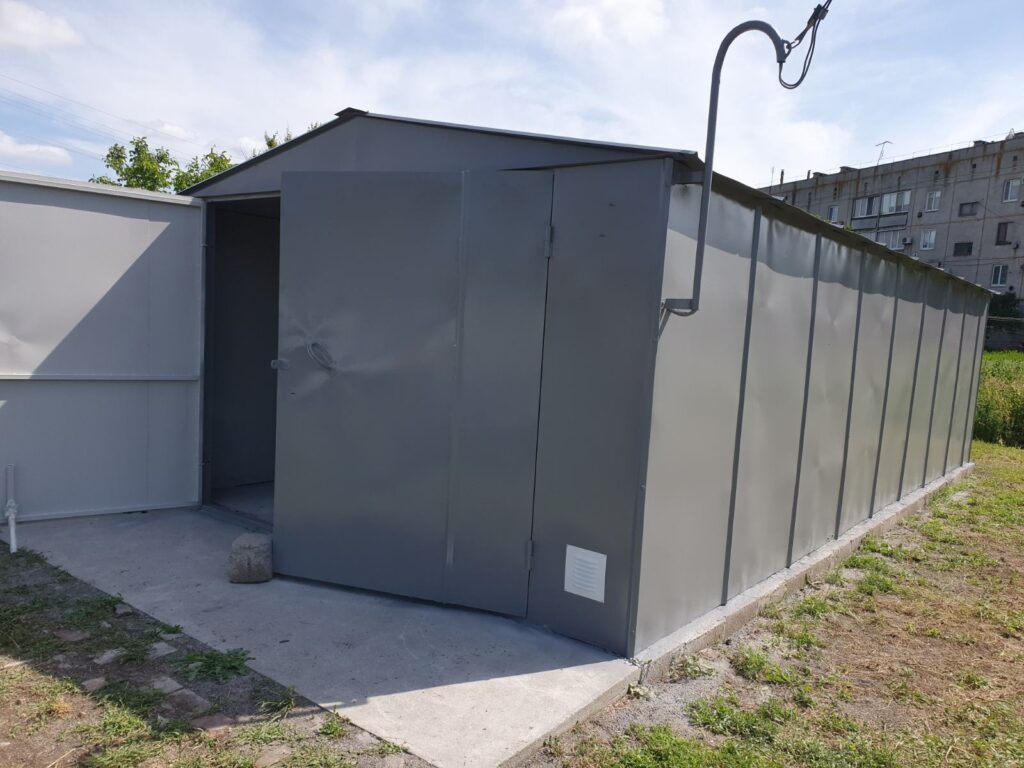
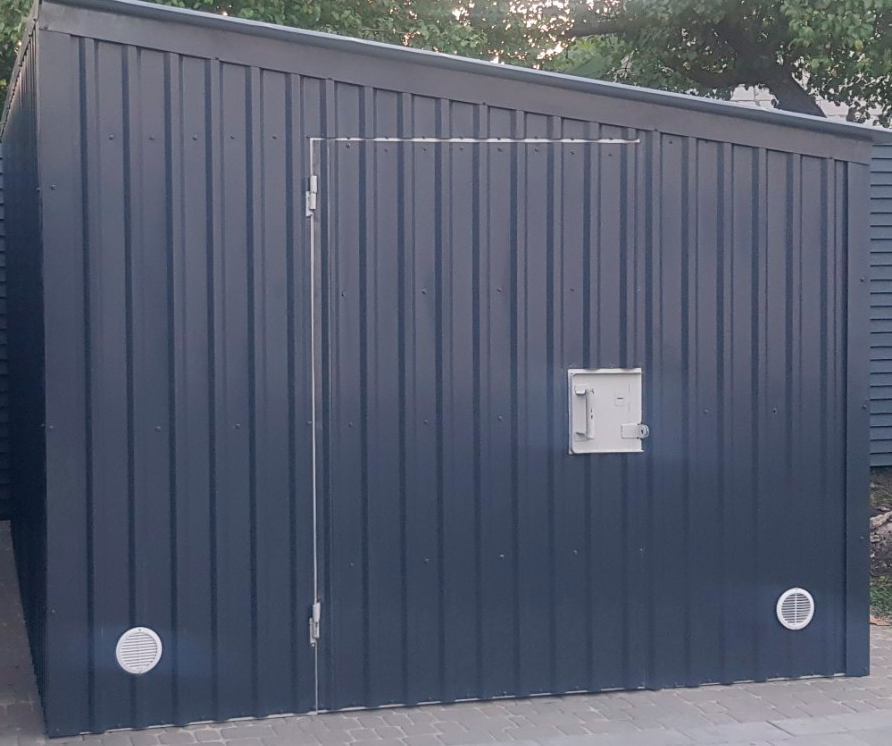
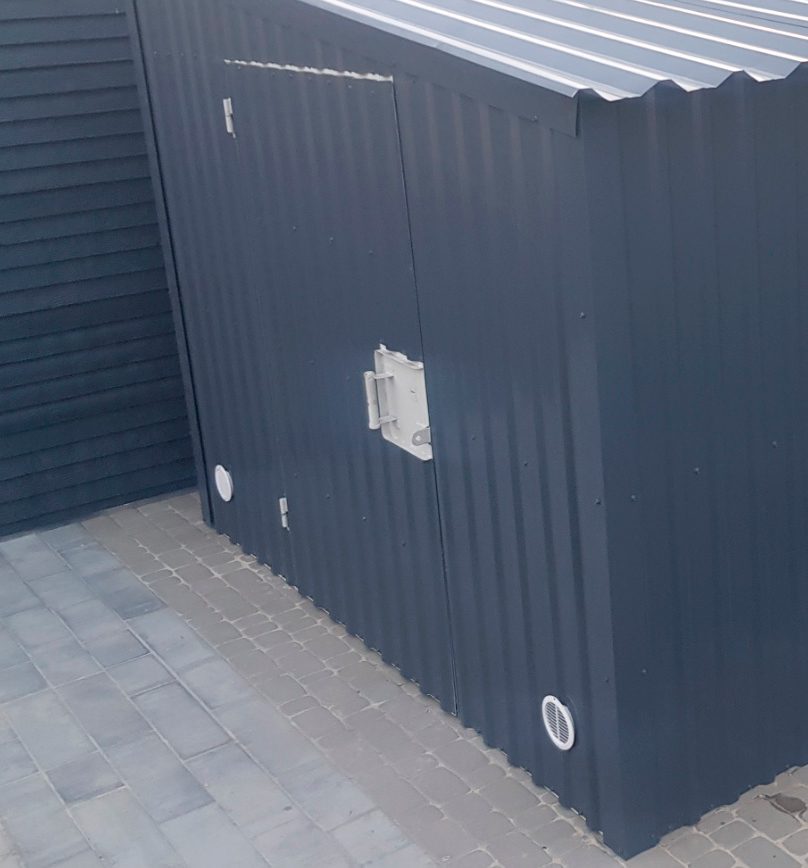
- Intake openings (grilles) — located in the lower part of the garage door or side wall (10–30 cm above the floor).
- Exhaust openings — located in the upper part of the opposite wall or on the roof (10–20 cm below the ceiling or via a roof vent/cowl).
- Recommended opening diameter: 10–15 cm per duct (for a 5.7 x 3.8 x 2.0 m garage: at least two intake ducts and one or two exhaust ducts).
- The external ends of the pipes must be covered with grilles to keep out rodents and insects.
Advantages of natural ventilation:
- Requires no electricity;
- Minimal costs (grilles, pipes, deflector);
- Operates year-round if positioned correctly;
- Ideally suited for TAF-87 unheated metal garages.
Disadvantages:
- Efficiency depends on the weather (draft is weaker in winter);
- Draft reversal is possible during strong winds.
A tip from TAF-87: When ordering a garage, plan for ventilation openings in advance—it is much simpler and looks better than cutting into the finished structure.
2. Forced (mechanical) ventilation — for maximum efficiency
Fans that actively move air are used.
Main options:
- Exhaust fan in the exhaust duct (the most common and simplest method);
- Supply and exhaust system with two fans;
- Duct fans within the air ducts.
Advantages of forced ventilation:
- Stable air exchange regardless of weather conditions;
- Adjustable air exchange rate (recommended: 4–6 garage volumes per hour);
- Effective removal of exhaust fumes after engine warm-up;
- Automation capabilities (humidity and CO sensors, timers).
Disadvantages:
- Requires electricity;
- Higher costs, depending on the equipment;
- Fan noise (choose models rated up to 35–40 dB).
Tip: For metal garages, an “exhaust fan + natural intake” setup works well. An exhaust fan (200–400 m³/h) mounted on the roof or wall, combined with intake grilles at the bottom of the garage door, is an optimal and cost-effective solution.
3. Hybrid ventilation — the best balance
- Air intake — natural (grilles at the bottom);
- Exhaust — forced (fan + ventilator cap);
- Optional: heat recovery unit or residential ventilator for heated garages.
Practical recommendations for setup
- Calculation: For a garage of 18–24 m², a total intake vent area of approx. 200–300 cm² and an exhaust vent area of approx. 150–250 cm² are sufficient.
- Placement: Intake and exhaust vents should be located on opposite sides or diagonally from each other.
- Protection: Grilles or mesh screens are mandatory.
- Winter: If the garage is unheated, intake vents may be partially covered temporarily, but must not be completely sealed.
- Condensation: The best prevention is steady airflow combined with wall insulation (if you plan to spend significant time in the garage).
- Safety: Do not use the ventilation system to vent smoke from a stove or heater; a separate chimney is required for that purpose.
Conclusion
Proper ventilation is not a luxury but a necessity for metal garages. It protects your vehicle from corrosion and ensures that spending time in the garage is both comfortable and safe.
If you are planning to purchase a TAF-87 garage or already own one, please contact us. We can help design the right ventilation system during the manufacturing stage or recommend the optimal solution for a garage that is already installed.

